The Industrial Development Plan of Hue City for the 2025–2030 period, with a vision to 2045, sets a target of increasing the share of the industry and construction sector to approximately 36–38% of the city’s GRDP by 2030.
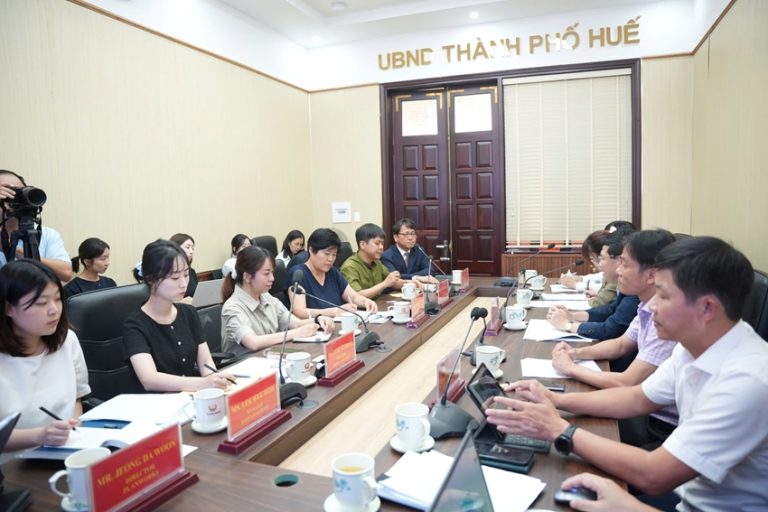
On March 6, the Department of Industry and Trade of Hue City, in collaboration with the Institute for Strategy and Policy Studies (Ministry of Industry and Trade), organized a workshop to gather feedback from central and local government agencies, experts, and businesses to finalize the Industrial Development Plan of Hue City for the 2025–2030 period, with a vision to 2045.
According to the Department of Industry and Trade of Hue City, during the 2021–2025 period, the city’s industrial production index (IIP) recorded positive growth year after year, with a 12.9% increase in 2025 compared to the previous year. However, industrial development still faces several limitations, including a relatively small industrial scale, low technological content and value-added in products, and underdeveloped value chain linkages and supporting industries that have yet to match the city’s potential or create a strong growth momentum for the economy.
According to some experts, this growth rate remains below the city’s potential. Therefore, delegates and specialists noted that, in the new context, Hue City is facing both opportunities and challenges in industrial development.
Experts emphasized that the formulation and implementation of the Industrial Development Plan for the 2025–2030 period, with a vision to 2045, is of great significance in providing strategic direction, identifying priority industrial sectors, and proposing breakthrough solutions to attract investment, develop industrial infrastructure, and enhance production capacity.
According to the orientation outlined in the Department of Industry and Trade’s Plan, by 2030, the industry and construction sector is expected to account for approximately 36–38% of GRDP, of which the processing and manufacturing industry will represent 80–90% of the industrial sector structure.
To achieve this target, experts suggested that Hue should clearly identify its key industrial sectors and prioritize investment attraction in high value-added industries such as processing and manufacturing, high-tech industries, supporting industries, and sectors that leverage the city’s competitive advantages.
At the same time, attention should be given to developing an innovation ecosystem, promoting digital transformation in industrial production, and improving the quality of human resources to meet the requirements of modern industries.
According to Phan Quy Phuong, Vice Chairman of the Hue City People’s Committee, industrial development is one of the key drivers of economic growth, job creation, income improvement for residents, and increased state budget revenues.
However, for Hue City, development must always go hand in hand with preserving and promoting cultural and heritage values, protecting the environment, and building a civilized and modern urban area.
Therefore, the development of the Industrial Development Plan for the 2025–2030 period, with a vision to 2045, plays an important role in concretizing the major socio-economic development orientations and policies of both the central government and the local authorities.
The leadership of Hue City requested relevant departments, agencies, and consulting units to fully incorporate feedback from delegates in order to finalize a high-quality Plan for submission to the competent authorities for review and approval. This will provide an important foundation for promoting the rapid and sustainable development of the city’s industrial sector in the coming years.