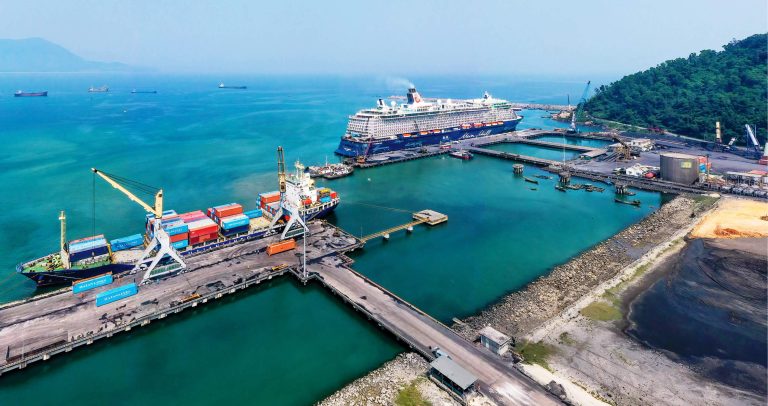
With nearly 3,300 kilometres of coastline and a maritime area exceeding one million square kilometres, Viet Nam is strategically positioned along major international shipping routes, particularly those linking East Asia with Europe, Africa and the Americas, giving the country distinct advantages for developing its marine economy and maritime logistics sector.
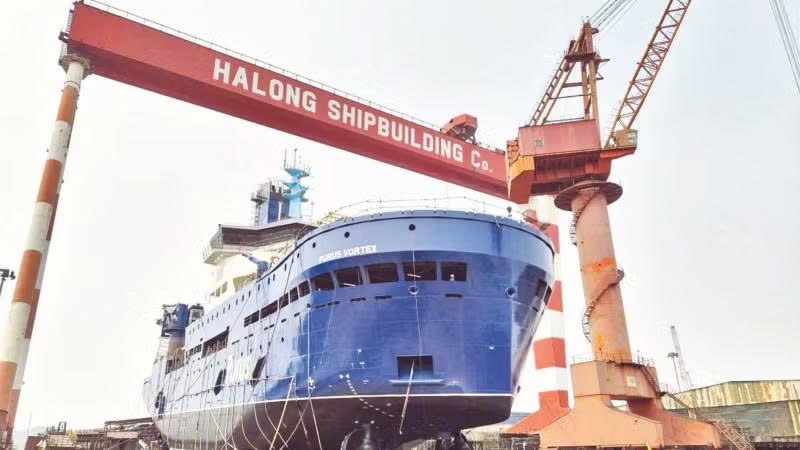
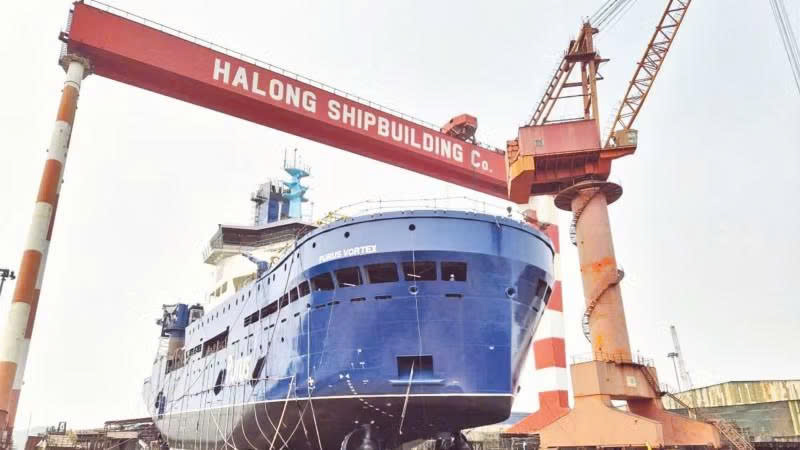
As such, the marine economy has been identified as a strategic national priority. The coordinated development of marine economic sectors, including maritime transport, seaports and the shipbuilding industry, will form a vital foundation for building a national maritime industrial ecosystem in the long term.
A foundational national industry
At a time when the marine economy is emerging as a new engine of growth for many countries, the shipbuilding industry plays a particularly important role in developing a nation’s maritime capabilities.
A strong shipbuilding sector helps safeguard maritime sovereignty by enabling the independent design, construction and repair of vessels. It also strengthens capacity for disaster response, search and rescue operations, and maritime security.
Furthermore, it underpins the development of a national merchant fleet, offshore oil and gas service vessels, marine construction vessels and offshore wind service vessels.
Pham Hoai Chung, Chairman of the Shipbuilding Industry Corporation (SBIC), noted that the Party Central Committee has continued to affirm shipbuilding’s status as a foundational national industry, not only in economic terms but also in relation to industrialisation, technological self-reliance, logistics and national security. The shipbuilding sector is also a vital link in the global transition towards a green economy and clean energy.
The growing trend towards clean-fuel vessels, smart ships, offshore wind service vessels and floating marine structures is creating significant opportunities for Viet Nam’s shipbuilding industry, provided that systematic, long-term investment strategies are adopted.
Developing the shipbuilding industry is a strategic requirement for building a self-reliant economy while advancing a modern marine economy. It is also one of the key factors enabling Viet Nam to realise its ambition of becoming a strong maritime nation in the new era of development.
“Maritime transport accounts for approximately 80-90% of global trade volume. In Viet Nam alone, around 80% of trade cargo is transported by sea. This means that without a sufficiently strong fleet and independent shipbuilding and repair capabilities, the national logistics chain would remain heavily dependent on foreign shipping capacity, resulting in higher logistics costs, reduced resilience to disruption and weaker economic self-reliance,” Chung said.
The global shipbuilding market is valued at approximately 150-180 billion USD annually, with the vast majority dominated by China (around 50%), the Republic of Korea (nearly 30%) and Japan (almost 20%).
Between 2024 and 2028, the global shipbuilding market is projected to expand by more than 22 billion USD, with average annual growth of nearly 4%, reaching an estimated 195 billion USD by 2030.
Although Viet Nam has an established shipbuilding industry, it has yet to secure a stable position on the global shipbuilding map.
A new driver of growth
As Viet Nam aims to achieve double-digit economic growth in the coming years, the development of the shipbuilding industry could become one of the key drivers of industrial expansion, exports, employment and national technological capacity.
According to maritime experts, shipbuilding has a high economic multiplier effect. Every vessel built is the product of dozens of supporting industries and technical services. The sector also generates a large number of high-skilled jobs.
In terms of exports, shipbuilding generates substantial added value. A newly built vessel may be worth from tens of millions to several hundred million US dollars.
If Viet Nam enhances its shipbuilding capacity, export revenues will increase significantly, helping to improve the trade balance and boost GDP growth. Investment in shipbuilding should therefore be regarded as a long-term national industrial development strategy.
With sound planning and a clear strategic direction, the shipbuilding industry could become a new growth pole, directly contributing to the country’s economic growth targets.
Nguyen Van Thanh, Vice Chairman of the Central Theoretical Council, stated that as Viet Nam seeks to renew its growth model, enhance national competitiveness, promote science and technology, foster innovation and accelerate digital transformation, the marine economy is also shifting towards a development model built on value chains, logistics, supporting industries and high technology. This will require the development of the requisite industrial capabilities to support the sustainable growth of the marine economy.
“The development of the marine economy must be integrated into the overall national development strategy and linked to the building of foundational industries and the strengthening of enterprises’ internal capabilities, thereby enhancing national self-reliance, resilience and competitiveness. Current trends, including the application of artificial intelligence (AI), the Internet of Things (IoT), big data, automation and advanced monitoring systems, are shaping the development of a green marine economy. Marine economic development in the new era is therefore no longer associated solely with traditional infrastructure and industries, but also with the establishment of modern marine technology ecosystems, digital marine data infrastructure and smart ocean governance models,” Thanh said.
For many years, the Party and the State have placed special emphasis on the development of the marine economy and maritime industries, and are determined to transform Viet Nam into a strong maritime nation that prospers from the sea.
The marine economy is regarded as a strategic arena for expanding growth opportunities, enhancing national competitiveness and safeguarding maritime sovereignty. If this opportunity is effectively seized, the shipbuilding industry could generate compounding economic benefits for the broader economy.
Maritime and shipbuilding experts have recommended that the relevant authorities study and submit proposals to the government to promptly formulate a national fleet development strategy linked to domestic shipbuilding orders. They have also called for a Viet Nam shipbuilding industry development strategy to serve as the foundation for long-term implementation.
At the same time, planning should be accelerated to establish integrated shipbuilding-logistics-seaport industrial clusters in areas with strong potential, with a view to sustainably reducing logistics costs.
In addition, special incentive policies and mechanisms should be introduced for the shipbuilding industry in areas such as finance, credit, taxation and land use.