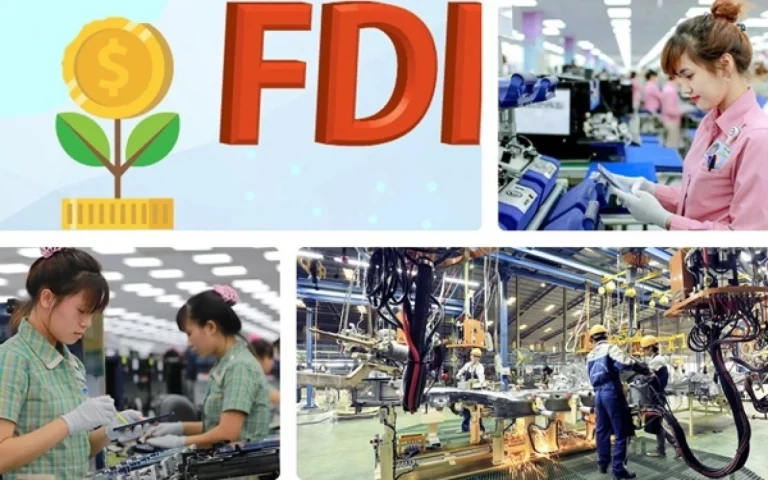
Resolution 10-NQ/TW of the Politburo on the development of the foreign-invested economy opens up a new direction for attracting selective, high-tech, and sustainable foreign investment. This provides a basis for Vietnam to continue strengthening the confidence of European businesses and welcoming high-quality capital flows.
Elevating Vietnam-EU investment relations.
Just a few weeks ago, on August 1st, we celebrated the 6th anniversary of the signing of the Vietnam-EU Free Trade Agreement (EVFTA). In these short 6 years, bilateral trade between Vietnam and the European Union (EU) has reached nearly US$400 billion – accounting for almost half of the total US$900 billion trade since 1995. Entering its 7th year of implementation, Vietnam will enjoy tariff-free access to 99% of tariff lines. This comprehensive tariff elimination strengthens Vietnam’s position as one of Europe’s leading trading partners in ASEAN.
Along with the growth in trade, the two sides elevated their bilateral relationship to a Comprehensive Strategic Partnership (CSP) on January 29, 2026. Vietnam is proud to be the first ASEAN country to establish a Comprehensive Strategic Partnership with the EU – a profound testament to the mutual trust and shared strategic interests of both sides.
Domestically, Vietnam’s economic development has also been impressive. Vietnam’s nominal Gross Domestic Product (GDP) has officially surpassed that of the Philippines – a remarkable turnaround considering that in 1990, the Vietnamese economy was only one-eighth of that figure. Vietnam is firmly positioned as a major growth engine in Southeast Asia, actively closing the gap to become one of the region’s top three economies.
This dynamic development trajectory is reinforced by FTSE Russell’s plan to upgrade Vietnam’s stock market to a secondary emerging market this September, unlocking capital and directly integrating Vietnam into global financial circuits.
Optimism is clearly reflected in the realistic assessments of European business leaders. According to EuroCham’s latest Business Confidence Index (BCI) report for Q2 2026, business confidence surged to 79.7 points, once again nearing the historic 80-point mark, despite the volatile global macroeconomic environment. Currently, 54% of our European member companies consider Vietnam a strategic market and a core operating base.
European businesses are not only seeking markets, but also expect a transparent, stable investment environment that is favorable to technology, innovation, and sustainable development. With Resolution 10-NQ/TW, Vietnam-EU relations will enter a phase of deeper cooperation.
This positive outlook aligns with Resolution 10-NQ/TW (Resolution 10) of the Politburo , marking a visionary and indispensable turning point in Vietnam’s economic strategy. It represents a decisive shift from quantity-driven, labor-intensive foreign investment to selective, high-tech, digitized, and sustainable foreign direct investment.
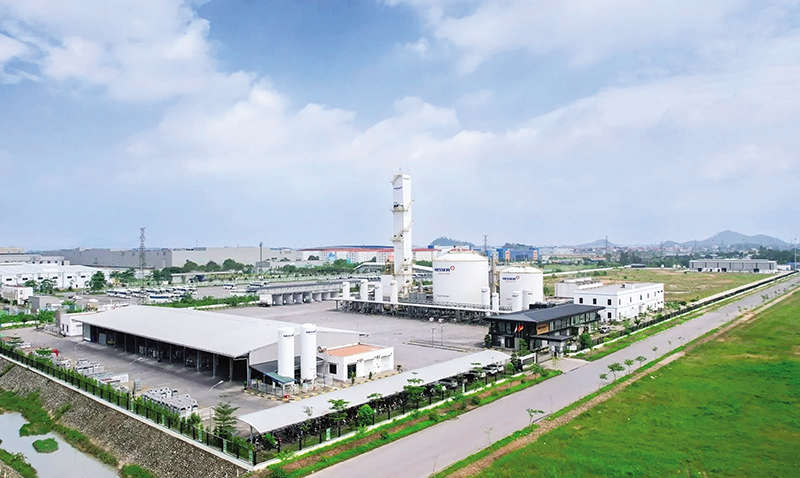
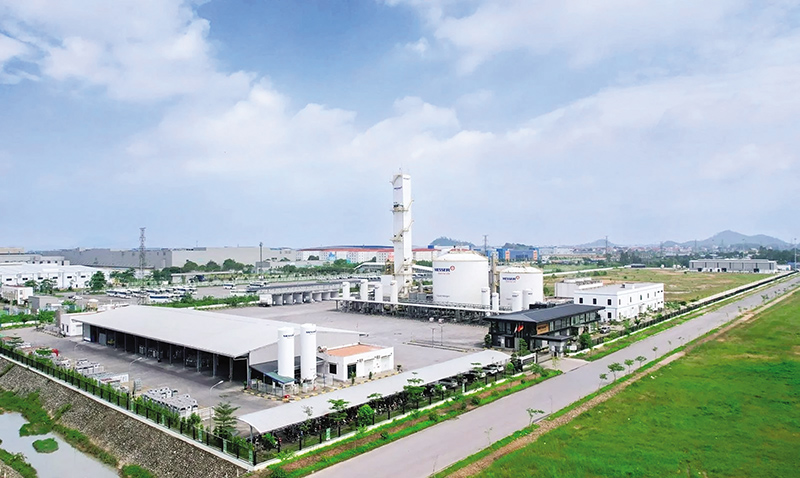
This philosophy reflects what European businesses have always pursued: European investment is clean capital, with high-quality governance, stringent ESG standards, closed-loop circular production models, and genuine high-tech transfer.
European businesses do not operate in isolated areas. We proactively develop Tier 1 and Tier 2 domestic suppliers in Vietnam, transferring technology, raising quality standards, and sustainably integrating local industries into global value chains.
However, in this high-end foreign investment segment, competition to attract sustainable capital is fierce. Global capital flows are always selective. When European businesses evaluate long-term, multi-billion dollar industrial projects, their investment decisions depend on four indispensable pillars: policy predictability and legal certainty; strict non-retroactivity in administrative and tax enforcement; speed of operation and synchronized management across 34 provinces and cities; availability of clean energy sources and infrastructure, including industrial renewable energy, a modernized transmission grid, and a commercially viable and capital-mobilizing Direct Power Purchase Agreement (DPPA) framework.
By translating Resolution 10 into practical, easily implementable administrative measures, Vietnam will attract the next generation of advanced technology and manufacturing investments from Europe.
We welcome the Ministry of Finance ‘s timely response on two strategic levels: at the macro-institutional level and through concrete, practical solutions for our member businesses.
We welcome the National Assembly and the Ministry of Finance’s enactment of Law No. 09/2026/QH16 amending key tax laws. This landmark law establishes a tax deduction mechanism in the digital economy, requires e-commerce platforms to deduct taxes at source, systematizes regulations on the Global Minimum Tax Pillar 2, redirects incentives toward practical research and development investment and spending on green projects, and accelerates automatic value-added tax (VAT) refunds for legitimate exporters through a nationwide electronic invoice reconciliation system.
Simultaneously, the new Customs Law – Law No. 11/2026/QH16 and amendments to the decree, currently under consultation with the Ministry of Finance, bring about important structural breakthroughs: regulations on “Compliance Management” to protect legally compliant businesses from excessive physical inspection of goods and post-clearance audits; establishing a dedicated electronic customs clearance procedure for cross-border e-commerce; and abolishing the outdated bonded warehouse system to eliminate unnecessary administrative burdens.
Equally impressive is the Ministry of Finance’s leadership in digitalization. With over 99% of tax declarations and refunds processed electronically, seamless integration of the VNeID digital identity system, and the deployment of artificial intelligence algorithms and big data to cross-check supply chain invoices and assess refund risks without manual summonses, Vietnam is setting regional standards. Combined with automated customs clearance via the green channel in less than 3 seconds through VNACCS/VCIS and the centralized specialized inspection reforms under Decision 38/QD-TTg and Decision 628/QD-TTg, administrative modernization is delivering real speed.
This progress at the macro level is accompanied by addressing specific issues in practice: strong institutional dialogue channels are maintained, customs HS code classification, trademark marking, etc.
Institutional reforms are needed to retain European investors
This wave of optimism comes with an operational caveat: strong internal performance is unlikely to offset a cumbersome legal framework. To translate this current positive sentiment into large-scale future projects, Vietnam needs to further promote administrative reforms, improve long-term financial predictability, and facilitate capital retention.
We need to continue focusing on long-term financial predictability and capital retention. Regarding corporate income tax incentives, we respectfully propose the early issuance of consolidated guidelines on transitional effect to eliminate legal ambiguities for existing investment projects in industrial parks. Furthermore, to maintain Vietnam’s competitive advantage, we propose the reintroduction of stable, geographically-based corporate income tax incentives for industrial parks, combined with specialized financial incentive packages for eco-industrial parks – such as a 100% over-deduction mechanism for eligible green research and development (R&D) investments, as well as extending land lease terms to 70 years.
We respectfully propose the institutionalization of a mechanism for regular technical meetings between our specialized units and sectoral committees to directly address these practical issues.
Vietnam is on the threshold of a new economic era. EuroCham reaffirms its commitment to playing a sustainable and constructive bridging role between European investors and the Vietnamese Government, ensuring that the ambitious goals of Resolution 10 are realized into sustainable shared prosperity.