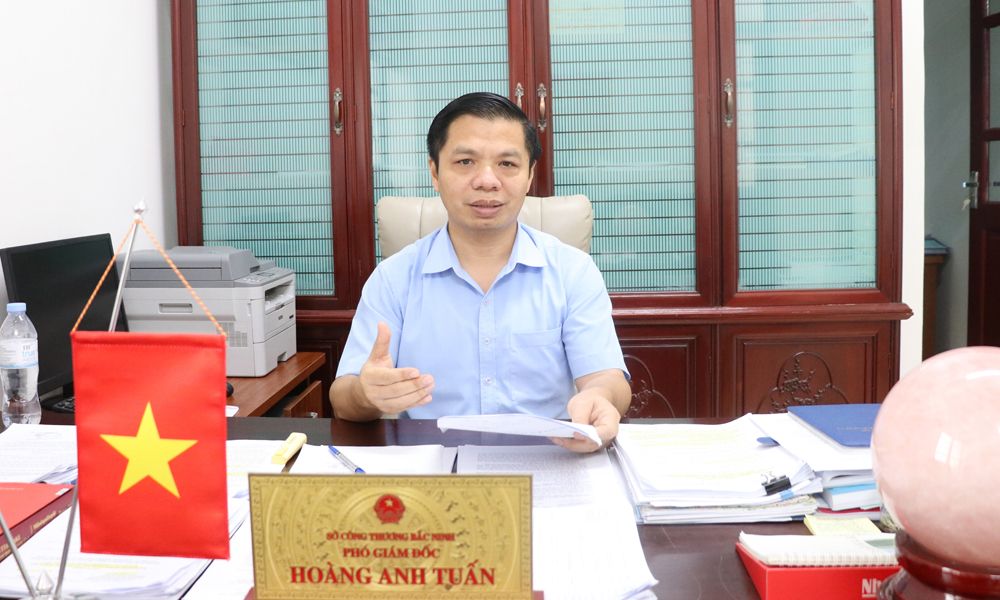
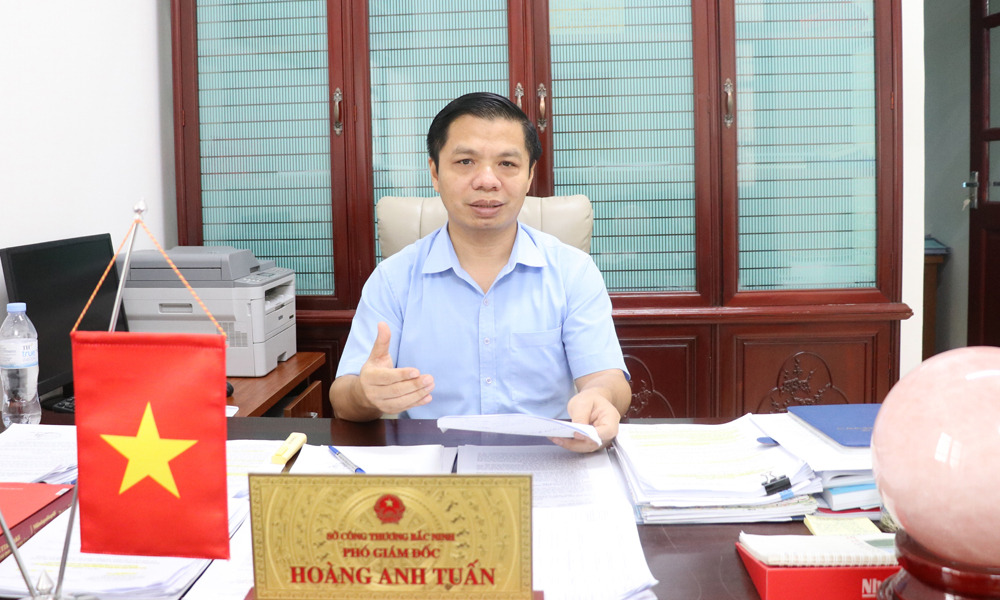
After studying the Bac Ninh City Master Plan until 2050, with a vision to 2075, Mr. Hoang Anh Tuan, Deputy Director of the Department of Industry and Trade, proposed several points.
According to Comrade Hoang Anh Tuan, the Department of Industry and Trade highly agrees with the orientation of the Bac Ninh urban master plan until 2050, with a vision to 2075.
The plan clearly defines the goal of developing Bac Ninh into a high-tech industrial center, a free trade zone, a multimodal logistics hub, and a modern service center for the region and the country; shifting strongly from a processing industry model to a high-tech industry, semiconductor industry, manufacturing industry, artificial intelligence, and digital economy . These directions are consistent with the development strategy of the Industry and Trade sector in the new phase.
To ensure the feasibility of the plan and to create momentum for the development of economic and technical infrastructure, the Department of Industry and Trade proposes that during the finalization process, it is necessary to continue reviewing and rationally allocating space for industrial, commercial, and logistics development according to regions and development axes; allocating suitable land for high-tech industrial zones and clusters, logistics centers, modern commercial infrastructure, and energy projects to serve long-term development.
In addition, it is necessary to ensure synchronization between urban planning and the planning of industrial development, electricity systems, logistics, warehousing, and transportation hubs connecting Gia Binh International Airport, the Northern Special Economic Zone, and the railway and road systems.
This is a crucial condition for enhancing competitiveness, reducing logistics costs, shortening transportation times, attracting investment from major technology corporations; and simultaneously promoting the development of the industrial ecosystem, supporting industries, and key industrial clusters.
Regarding spatial development orientation, the Department of Industry and Trade agrees with the multi-polar, multi-center development model and the formation of a central industrial-urban economic zone. However, it requests that the planning unit further clarify the functional zoning of each key industrial sector.
In particular, it is necessary to clearly define the development space for high-tech, semiconductor, microchip, and artificial intelligence industries in the Yen Phong – Hiep Hoa – Que Vo economic clusters; and at the same time, synchronously plan industrial zones and clusters along these economic axes to proactively create clean land funds and attract large-scale FDI corporations.
For the specialized economic zone in the North at Kep – Lang Giang area, it is proposed to develop detailed plans for supporting industrial sub-zones linked to the railway warehousing and logistics system to effectively utilize the Kep International Intermodal Station, enhancing transportation and transshipment capacity.
Regarding commercial and logistics infrastructure, the plan has established three logistics hubs in Que Vo, Kep, and Gia Binh. However, further clarification is needed on the connectivity between industrial zones and logistics centers and port systems; priority should be given to investing in transportation routes that meet container shipping standards to ensure smooth goods flow.
For the Bac Ninh Free Trade Zone in the Gia Binh International Airport area, it is proposed that priority be given to allocating land for the development of bonded warehouses, cold storage facilities, and distribution centers for high-value goods, meeting the requirements of cross-border e-commerce development and air logistics.
Besides the international logistics system, domestic trade infrastructure also needs attention. It is proposed to review and allocate land for the Tien Phong wholesale market and the Thuan Thanh wholesale market complex in order to improve the capacity for the circulation and consumption of agricultural products and develop the province’s supply chain.
Regarding energy infrastructure, semiconductor industrial parks and data centers in Que Vo, Yen Phong, and Canh Thuy will have a very high demand for stable, high-quality electricity. Therefore, it is proposed to plan the 110 kV, 220 kV, and 500 kV power grid systems to match the load forecasts of each area; allocate space for the development of green energy sources, renewable energy, waste-to-energy, Cam Son pumped-storage hydropower, energy storage systems, and nuclear power to meet the green transition requirements of international investors.
It is necessary to study the integration of land use and technical corridors to develop electric vehicle charging station systems in urban areas, public parking lots, and industrial zones, creating a foundation for the green energy transition process in the province.